
Vol.5 Four Unforgettable Paintings
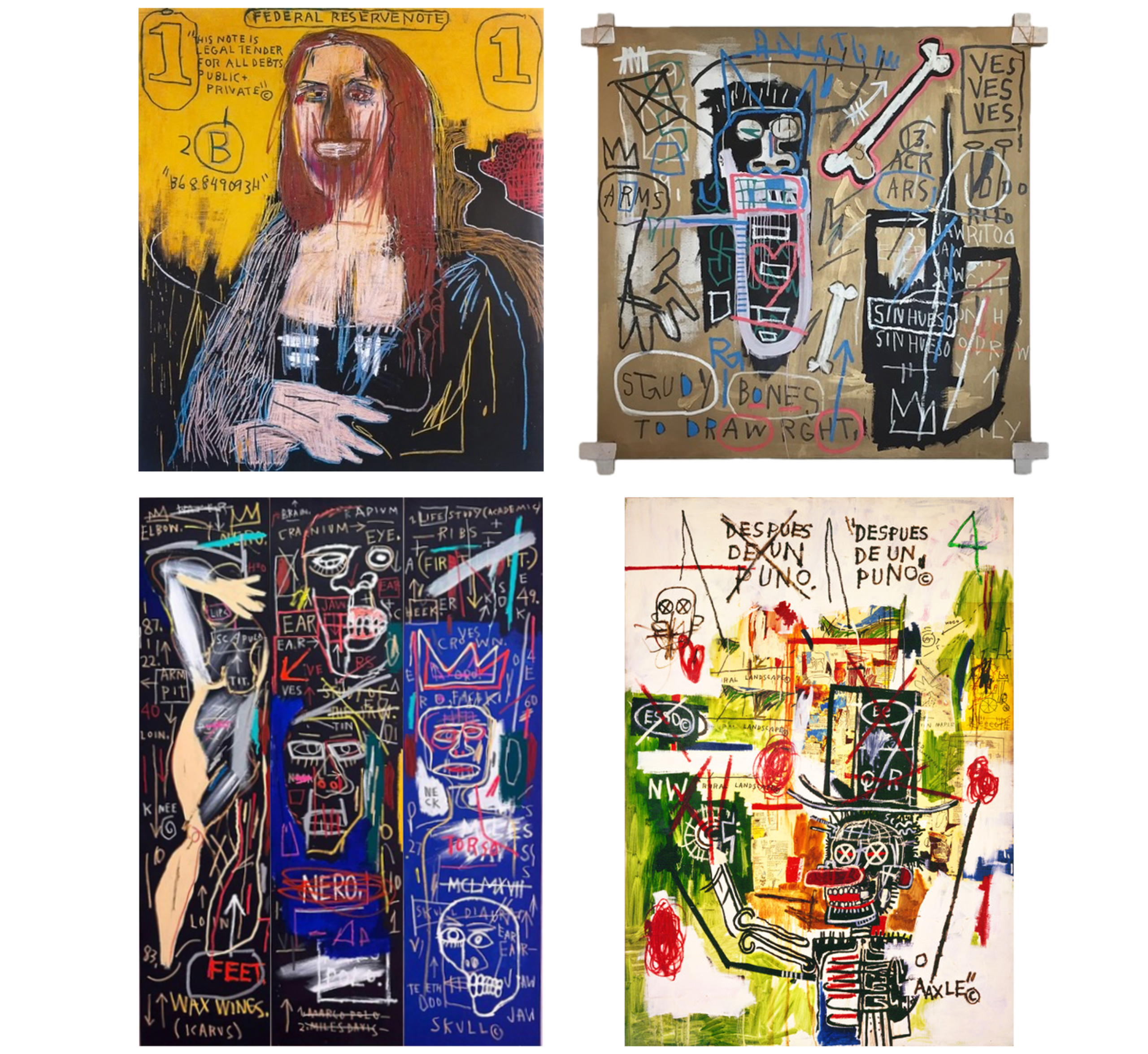
Over the years, I have handled many works by Jean-Michel Basquiat, but there are four paintings that remain unforgettable to me. At one time, each of them was part of collection of Galerie Sho Contemporary Art (Sho+1’s predecessor).
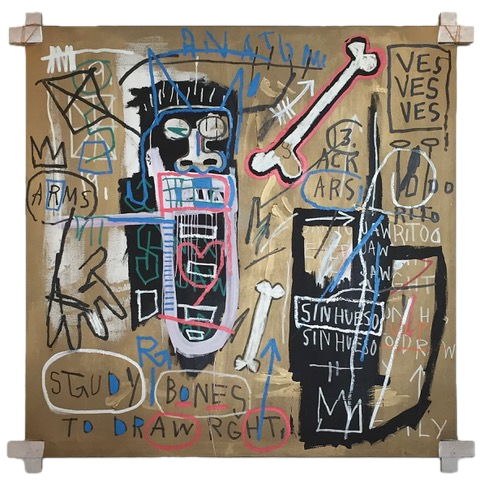
Untitled (Sin Hueso) , 1982
67 1/3 x 67 1/3 inches
This piece was purchased from a London-based collector through Larry Warsh, a contemporary art collector and publisher.
As one begins to decipher the distinctive words and symbols scattered across the canvas, Basquiat’s profound fascination with anatomy gradually comes into focus. Although the painting is concerned with bones, its subtitle, Sin Hueso — Spanish for “without bones”—introduces a deliberate contradiction. It suggests that Basquiat was not only examining the skeletal structure itself but also the muscles and flesh that surround it. By juxtaposing the parts of the body that contain bone with those that do not, he seems to be exploring the dual nature of the human body and, ultimately, of life itself.
Furthermore, by repeatedly inscribing the word “VES” (an abbreviation referring to blood vessels), Basquiat appears to evoke the speed and pulse of blood flowing through the body, transforming language into a visual expression of life’s energy. Here, words function not merely as text but as painterly elements that generate rhythm, movement, and vitality. This seamless fusion of language and image is one of the painting’s most compelling qualities.
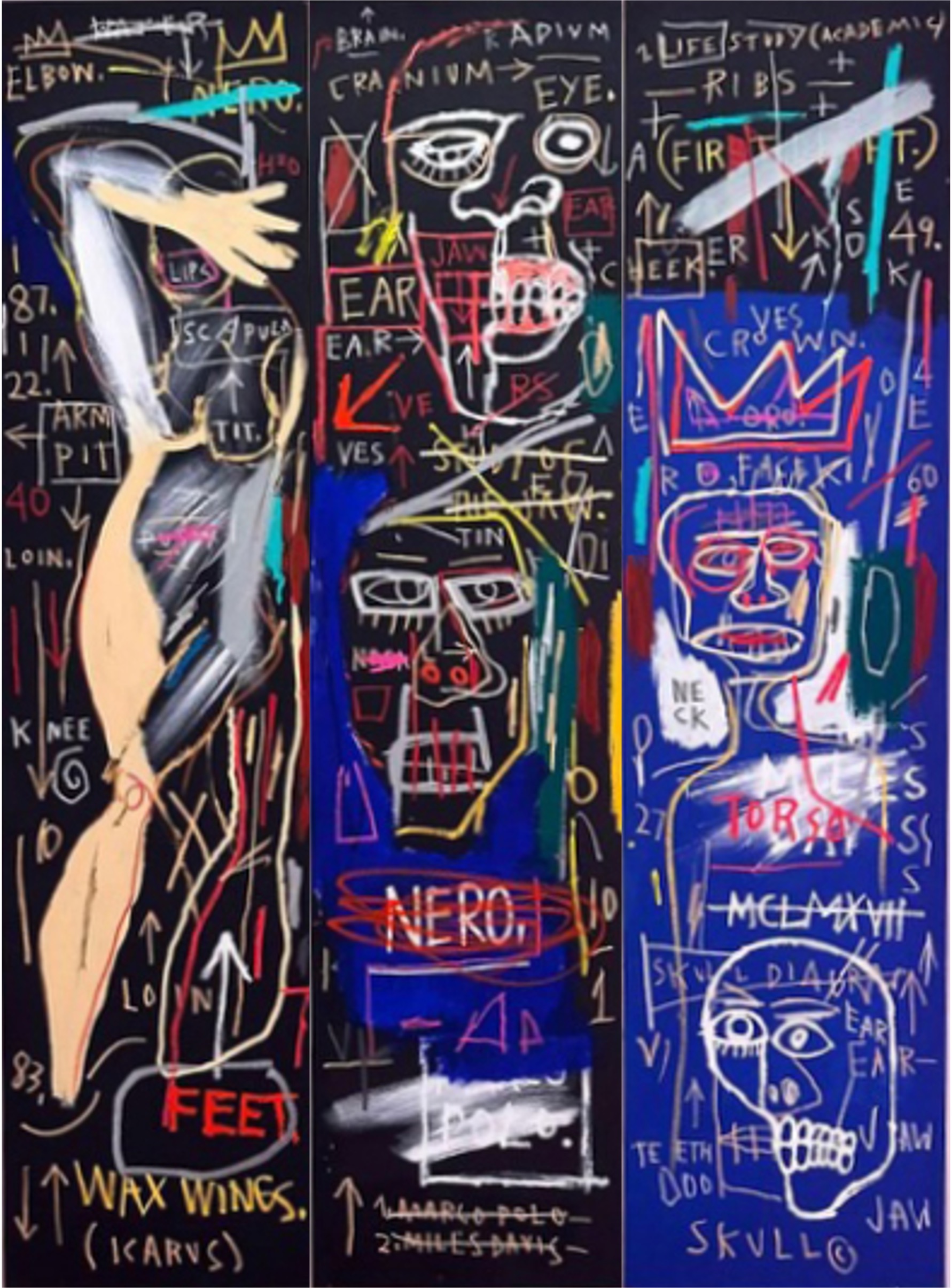
Untitled, 1983
96 x 72 inches, Triptych
The story of how I acquired this painting is one that has remained vividly in my memory.
At the time, the work was in Miami and was owned by a Dutch dealer, George Mulder, the publisher of Andy Warhol’s Reigning Queens and Keith Haring’s Andy Mouse print series. George was living with AIDS, and I believe he may have been in the process of putting his affairs in order. As part of that process, this painting was offered for sale.
The moment I saw it, I was overwhelmed by its extraordinary presence and visual power. I made the decision to purchase it without hesitation. However, the painting measured over 94 inches in height, making it impossible to display properly in my gallery at the time, as the ceiling was simply too low to allow the work to be viewed upright and in its full impact.
Reluctantly, I began searching for a suitable institution that could properly accommodate such a monumental work. Fortunately, the Museum of Art, Kochi expressed strong interest, and the painting ultimately became part of its collection.
Even so, letting it go was deeply painful. It was one of the most compelling Basquiat paintings I had ever encountered, and I regretted having to part with it. In fact, the experience inspired me to begin planning a gallery with higher ceilings, so that one day I would be able to exhibit works of this scale without compromise.
About ten years later, I was astonished to discover that the painting had reappeared at auction in New York. At the time, the market for Basquiat’s work was exceptionally volatile, and perhaps the owner felt it was the right moment to sell.
Determined to bring the painting back, I entered the bidding and stayed in until the price reached US$900,000. In the end, however, I became the underbidder, missing the work by the narrowest of margins. I can still vividly remember the profound disappointment I felt that day.
At first glance, this painting appears to be an anatomical study of the human body.
In reality, however, its true subject is not anatomy itself, but the fundamental question of what it means to be human.
Anatomical elements such as bones, blood vessels, and the skull are interwoven with historical and mythological references—including the crown, Nero, and Icarus—creating a complex meditation on the human body, intellect, power, and destiny.
Even the words that Basquiat deliberately crossed out are not meant to be erased; rather, they compel the viewer to notice and reconsider them.
It seems that this is a work in which Basquiat attempts not only to dissect the human body, but also the history and civilization that define humanity.
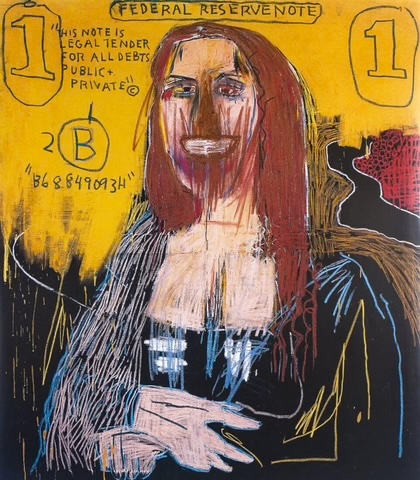
Mona Lisa, 1983
66 3/4 x 60 4/5 inches
I acquired this work from a New York art dealer. As I recall, it was probably the most expensive Basquiat I had purchased at the time. Even so, I did not hesitate to acquire it, as I was immediately drawn to its striking and universally recognizable image of the Mona Lisa.
While the painting pays homage to Leonardo da Vinci, Basquiat replaces George Washington’s portrait on the one-dollar bill with the Mona Lisa, only to aggressively deface her face with his own expressive marks. I feel that this suggests Basquiat’s characteristic irony—a meditation on the relationship between art and money, authority and history, and the uneasy reality that even the greatest masterpieces can become commodities within a capitalist society.
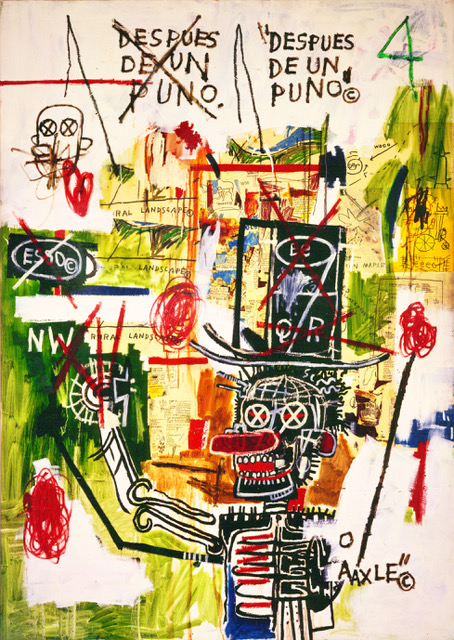
DESPUES DE UN PUNO, 1987
84 x 60 inches
This work is, in my view, one of Basquiat’s late masterpieces. I came across it at Vrej Baghoomian’s gallery in SoHo—a man who was often referred to as Basquiat’s last dealer.
Baghoomian would later become notorious for his involvement with forged Basquiat works but at the time his gallery still seemed to retain something of the intensity and energy that surrounded Basquiat.
By the later years of his career Basquiat had achieved enormous commercial success.
His life had become increasingly glamorous while at the same time his dependence on drugs had deepened.
To me some of the work from this period seemed to have lost a measure of the urgency and tension that had characterized his earlier paintings.
For that reason when I encountered this particular work I was immediately struck by its exceptional power.
The figure with an elongated nose reminiscent of Pinocchio is depicted with its skeletal structure exposed as though the body itself had been hollowed out or stripped of its substance.
Set against the vivid green that dominates the background the figure creates a remarkable contrast giving the entire composition a distinctive sense of tension and equilibrium.
Equally striking is the Spanish phrase “DESPUÉS DE UN PUÑO” (“after a blow”) which appears twice with one instance boldly crossed out.
Basquiat frequently employed this act of writing and erasing—not necessarily to negate meaning but rather to draw the viewer’s attention more forcefully to the words themselves.
The enigmatic inscription “AAXLE©” in the lower right corner further adds to the work’s sense of unresolved mystery.
The accumulation of these words signs and symbols gives the painting a remarkable depth leaving something that ultimately resists complete interpretation.
All Art Works
©︎2026 The Estate of Jean-Michel Basquiat
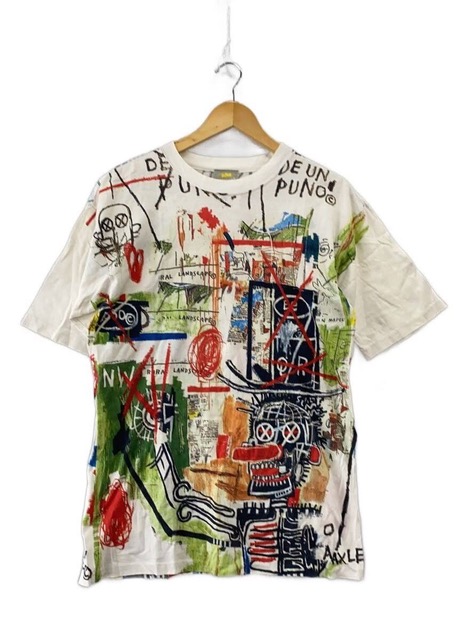
T-shirts
©︎2026 The Estate of Jean-Michel Basquiat / Manufactured by Galerie Sho Multiples 1997, Designed by Shigeru Yamaoka at Studio Give
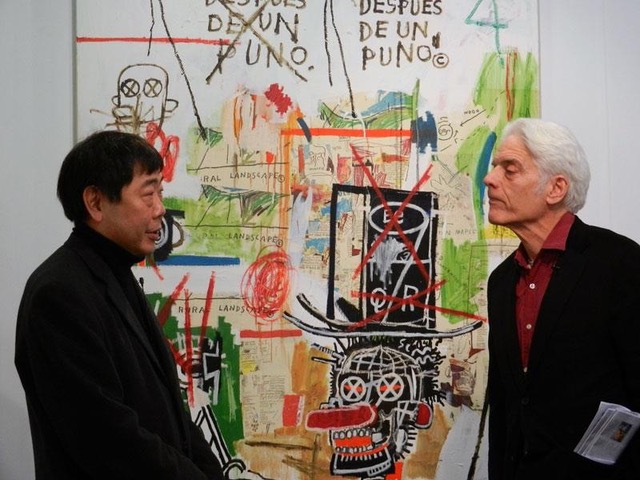
At The Armory Show 2013, in the Pier 92 Modern section, Tokyo-based Galerie Sho Contemporary Art attracted considerable attention by exhibiting works valued at approximately US$13 million at the time.
Covering the presentation was Judd Tully, one of America’s most respected art journalists and critics. Throughout his career, Tully has specialized in reporting on the international art market, major auctions, and leading art fairs around the world. He also published detailed reports on the Jean-Michel Basquiat works exhibited and offered for sale at the Galerie Sho Contemporary Art booth, examining both the sales activity and the context behind their pricing.